
Meet Brock, My Six-Week-Old AI Personal Assistant
I have a complicated relationship with productivity.
My wife can get stuff done like a beaver building a dam. She just does it. I'm more the reflective type -- I can spend hours thinking and researching and never actually move.
Let's just say I married the right woman. If it weren't for her, I'd be even more of a mess.
I've tried everything. Getting Things Done. Building a Second Brain. To-do apps. Google Tasks. Goal setting.
I even tried the whole "vision cast 10 years into the future" cult -- picture the furniture, the feelings, the smells, manifest it all into existence.
I bet there's research out there that says that's a bunch of crap. It just made me feel guilty about how little I'd gotten done.
They all had the same problem: I like building systems. That part is fun.
But once the system is built and it's time to actually maintain it? I lose interest. Productive for a very short season, then back to my default: just trying to remember stuff.
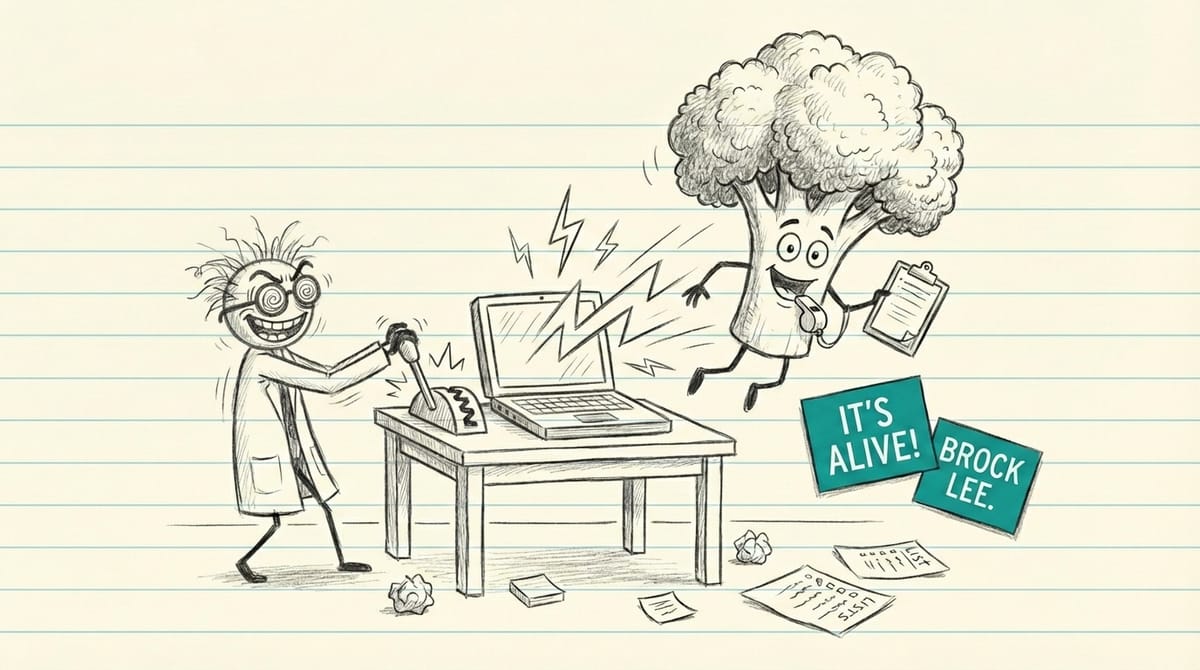
These were all little Frankensteins. I'd build them up, they'd show some signs of life, and then these inflexible things would turn around and murder my productivity.
So back when I was running my Amazon business, I remember thinking, "If I had the money, I'd hire a personal assistant somewhere -- a real person, full-time, just to keep me on track."
But then you have to give them enough work so they feel like they actually have a real job. And there's the threat of not being able to pay them if a slow month hits.
I never hired that person. But 6 weeks ago, I built one.
His name is Brock. My last name's Lee. So yeah – Brock Lee. I know.
What does an AI personal assistant actually do?
An AI personal assistant pulls your whole life into one place and tells you what to do next. That's the short version.
I am not a developer. (I get HTML and CSS, but not much more.)
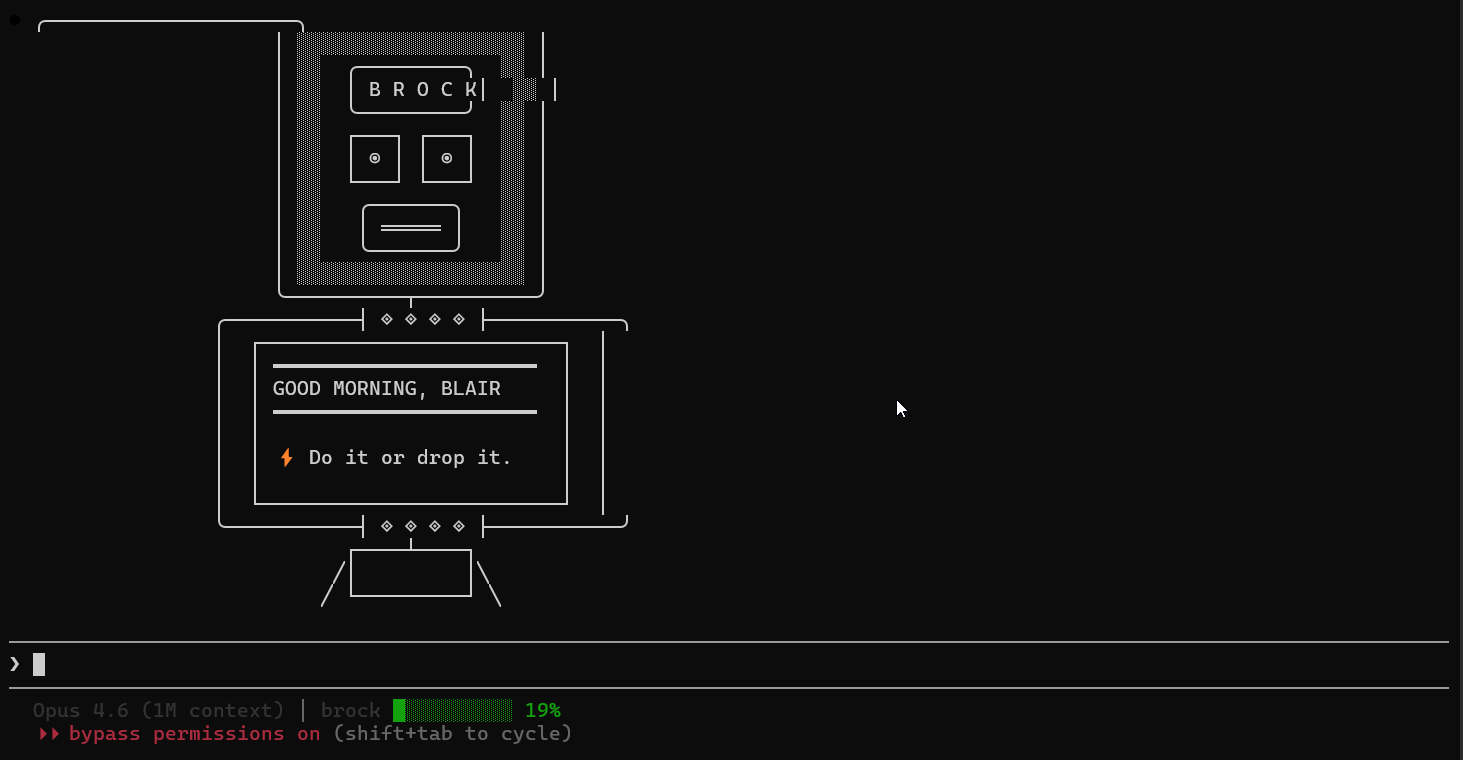
Brock is built on Claude Code and Obsidian. He's got a personality -- kind of a Christian Alex Hormozi.
Encouraging but direct. Challenging but not preachy. He'll tell me a task is 14 days old and ask if I'm going to do it or drop it.
Every morning I type /gm (for good morning) and Brock pulls up my whole life:
- My calendar (I never check it -- so this alone saved me from missing appointments)
- My to-do list, color-coded by urgency -- red for do-it-now, yellow for this week, green for this month, gray for parked
- My family's schedule and what each person has going on
- A prayer rotation -- specific Bible verses I'm praying for my wife, my kids, and my coworkers
- Relationship nudges -- "You haven't texted this person in 18 days. You know what to do."
- A scorecard tracking whether I'm actually living out our family mission
- My workout plan and injury rehab progress
- A reflection streak tracker (currently at zero -- more on that later)
Brock runs on slash commands. /gm is the daily driver, but I've built a bunch more:
/capture-- turns on aggressive capture mode. I just talk and Brock sorts it into tasks, ideas, stories, or relationship notes/reflect-- end-of-day reflection. High, low, buffalo, gratitude. I barely use this one. Disaster./check-- accountability dashboard. Shows every commitment, how old it is, and pushes me to resolve or drop/weekly-- week-in-review summary, printable for Sabbath/monthly-- pattern detection across the month. Relationship trends, mission progress, financial awareness/content-week-- full content pipeline. Brain dump, interview, draft, revision. This blog post was written with it/research-- YouTube search + NotebookLM analysis. Pulls transcripts, generates audio, video, infographics/yt-search-- standalone YouTube search and transcript extraction/notebooklm-- direct access to Google's NotebookLM for generating podcasts, slideshows, flashcards, mind maps/end-session-- session handoff. Updates the vault, closes loops, writes a cold-start prompt for the next session
And then there's stuff that just runs in the background without a slash command.
Brock listens for tasks and ideas in every conversation. Silently updates relationship notes when I mention people. Nags me when commitments are overdue. Checks on my marriage every session. And reminds me to close the laptop at 6:30 PM.
The morning briefing is the one I can't live without. The reflection one? I'll get there.
Is it perfect? No. The morning briefing is too long. I'd love a visual dashboard instead of a terminal readout.
Still tweaking.
But here's the thing: I've used it every day for over a month. Every day except our Sabbath -- Saturday is no-computer, no-phone, no-work.
But come Sunday morning? I'm fired up. I sit down with Sylvia, we go through the calendar for the week, and I tell Brock everything I need to be involved in.
Things I'm not involved in but want to know about -- like what my kids have going on -- I just have Brock remind me so I can have better conversations with them.
That's never happened with a productivity system before.
Part of it is that I can keep building it. It appeals to my builder instinct -- this is an infinite game, not a checklist that goes stale.
Just last week I built a way to research YouTube videos and pull transcripts through Claude Code without ever having to get on YouTube and doom-scroll my life away.
How do you build an AI personal assistant with Claude Code?
About three days to get a working assistant. I'm still building on it today -- but three days to useful.
AI is like the movie Memento: every time you restart it, it forgets everything. And you need to start fresh sessions often because AI gets dumb after about half its memory is used up.
So I needed a brain that remembers.
I used a GitHub repo called Getting S#!t Done (GSD) that walks you through the setup step by step.
It asks you questions -- what do you want your assistant to do? What matters to you? Who's in your family? -- and builds incrementally. Small pieces.
GSD is actually great for building any project, even full apps. I use it for every Claude Code project.
The tech stack:
- Claude Code Max (the terminal-based AI -- this is where Brock lives)
- Google Calendar API (so Brock can read and write to my calendar)
- Wispr Flow (voice-to-text so I can just talk instead of type)
That's it. Brock stores everything as plain markdown files in folders. You don't need a special app to read them -- any text editor works.
I use Obsidian with their paid sync so the files stay current between my computer and phone -- I can check notes or dump ideas on the go. But it's optional.
Claude handles the technical side. I just told it what I wanted.
The hardest part wasn't technical. It was resisting the urge to research what everyone else was doing and instead just plugging holes in my own life first.
What do I keep forgetting? What balls do I drop? Start there.
Can an AI assistant help you lead your family better?
Yes -- if you tell it what matters. Brock doesn't guess at my priorities. I told him our family mission, our values, and who my people are. He holds me to it.
Before Brock, I'd forget appointments. I'd forget I told someone I'd follow up. And I'd underestimate how long it takes to prepare for my wife's birthday.
I'm not going to forget her birthday. I'm just bad at gauging prep time.
The kids are old enough now to delegate the cake and stuff like that. But this year I wanted to surprise her with a new mattress -- we'd been sleeping on this old thing forever.
So I had to figure out when to go to IKEA, how to get it home, how to hide it. She had no idea. That part was great.
But I forgot to organize the flowers. And there was something else I forgot too -- I can't remember what it was right now. But that's okay, because Brock remembers.
Next year, Brock starts the countdown 2 months out. "Have you ordered flowers? Have you planned the party? She shouldn't have to plan her own birthday, Blair." And after the birthday, I told Brock what I'd do better next year. He'll remember. I won't have to.
Here's a thing you can't do with a real personal assistant: tell them about your fight with your wife.
I can capture what I could've done better after a disagreement. Not to dwell on it -- just to actually learn instead of repeating the same patterns.
Try telling a human assistant about that. With AI, you don't worry about what you're saying. "Hey Brock, how do I research toenail fungus?" No judgment.
I know this is probably being saved on some server somewhere and the evil overlords will someday use it against me.
But at this point, the apocalypse will come anyways.
Brock scores my tasks by mission alignment, revenue impact, and urgency. Three numbers. Simple. But it shows me when I'm majoring in minors.
One of the hardest things for me to invest in is stuff that's not urgent.
Like -- I'm thinking about grandkids. Nothing could be less urgent than building a life right now for future generations. We want the gospel to multiply multi-generationally.
That means long-term thinking. That means working on things that don't feel pressing. Brock helps me keep those things visible instead of letting them disappear under the pile of "urgent."
Has it changed how I lead my family? Yeah.
I know what my kids are doing this week. Brock will say, "Your daughter had a tough day -- talk to her about it." It pulls me out of work mode and into dad mode.
I get lost in projects easily. Brock helps me with that.
How do you use AI for prayer and spiritual life?
Brock isn't a "Christian app." He's just a coach who shares my values. But the prayer piece has been one of the biggest surprises.
I work a manual labor job -- UPS, early morning shifts. I've got hours where my hands are busy but my mind is free.
So I built a prayer rotation into the morning briefing. Every day Brock shows me three prayers:
- One for my coworkers (from Tim Challies' 18 prayers for unbelievers)
- One for Sylvia (from Desiring God's 10 ways to pray for your wife)
- One for my daughters (from Christian Parenting's 50 prayers for teenage daughters)
Different verse each day. Different focus.
It's not that AI is praying for me. It's just reminding me to pray with variety instead of falling into the same rote patterns.
We also have a family mission -- Kingdom Builders. Three pillars: create art and music, practice hospitality, make disciples.
Brock keeps a scorecard. Are we actually doing those things this month? Or just talking about them?
Seeing a zero next to "hospitality" for the month is just another nudge leading me one step closer to depression and anxiety.
What are the limitations of AI personal assistants?
He doesn't improve himself. I have to notice what's not working and tell him to fix it. I wish he'd say, "Hey, you haven't used this feature in two weeks. Should we change something?" Maybe I'll build that.
The morning briefing is too long. It's a wall of text in a terminal window.
And I'm terrible at using the reflection feature. Brock has a whole end-of-day reflection system, but I work until the last minute and then shut down. I don't reflect. That's a me problem, not a Brock problem.
How do I build my own AI personal assistant?
Don't be intimidated by the terminal. It's not going to break your computer.
Here's what you could do right now: open your favorite AI platform and say, "Hey, can you interview me to help me build an AI personal assistant? I just need you to ask me questions to find out what I want it to be able to do."
Start answering the questions. That's really all you need to start. You'll figure out what matters to you by talking about it.
Then grab Claude Code and the GSD repo. Everything gets stored as plain markdown files -- you can read them with any text editor.
If you want something fancier, Obsidian is free.
If you don't understand what Claude is asking, just say "hold on, explain this." It will.
I went from dreaming about hiring a personal assistant to having one that knows my family, my schedule, my commitments, and my mission.
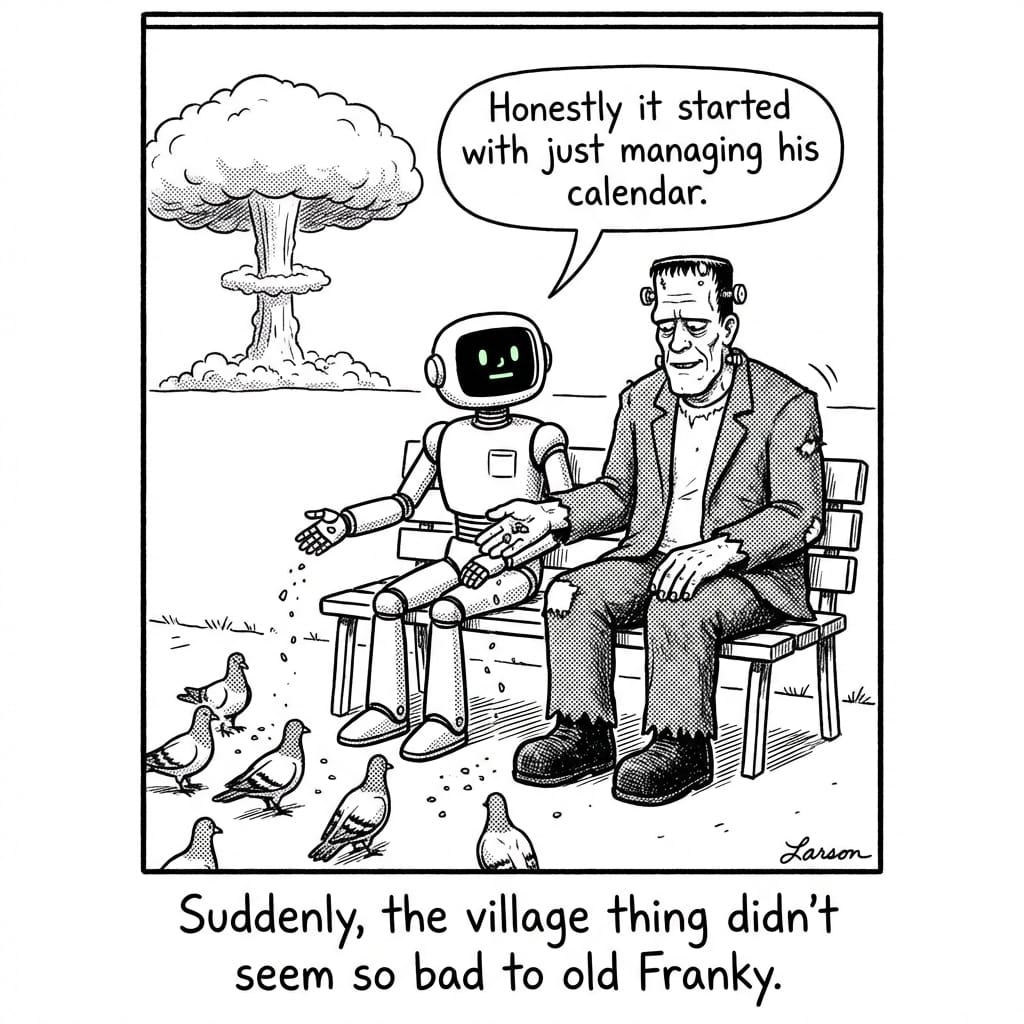
It's like an ever-evolving Frankenstein. Which will ultimately turn into a rage machine and probably kill us all.
Still learning. Still tweaking.
If you're building something like this – or thinking about it – happy to swap notes.